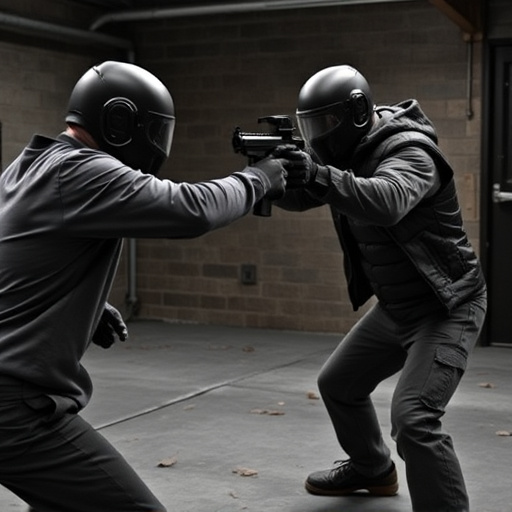
Pepper spray's capsaicin actively counteracts assailants across climates, offering immediate protection for outdoor and urban activities. However, temperature, humidity, and wind affect its potency and dispersion, necessitating climate-specific formulations to ensure consistent effectiveness regardless of geographical or seasonal changes.
“Unleashing the power of nature for self-defense, concentrated pepper extract has emerged as a game-changer in personal safety products. This article delves into the core competencies of pepper spray, exploring its effectiveness across various climates. With climate variations posing an unseen challenge, understanding how different environments impact spray performance is crucial. We’ll uncover strategies to optimize defense by adapting pepper extract formulations, ensuring maximum protection in any weather condition.”
- Understanding Pepper Spray's Core Competencies
- Climate Variations: An Unseen Variable in Pepper Spray's Performance
- Optimizing Defense: Adapting Pepper Extract to Different Environments
Understanding Pepper Spray's Core Competencies
Pepper spray, a concentrated pepper extract defense product, has established itself as a powerful tool for personal safety. Its core competency lies in its ability to incapacitate an assailant temporarily by provoking severe irritation and pain in the eyes, nose, and throat. This effect is achieved through capsaicin, the active ingredient found in chili peppers, which disrupts neurotransmission in these areas.
The effectiveness of pepper spray isn’t limited to specific climates; it performs consistently across various environments. In fact, its versatility makes it a preferred choice for outdoor activities like hiking and hunting, as well as urban settings. Regardless of whether you’re dealing with high humidity or cold temperatures, pepper spray maintains its potency due to the fast-acting nature of capsaicin. This ensures users receive immediate protection, giving them valuable time to escape dangerous situations.
Climate Variations: An Unseen Variable in Pepper Spray's Performance
Climate variations play a significant yet often overlooked role in the performance and effectiveness of pepper spray. The environmental conditions in which this defense product is used can dramatically impact its potency, duration, and overall success rate. For instance, temperature extremes—both hot and cold—can affect the viscosity and dispersion of the pepper extract, potentially reducing its ability to adhere to an attacker’s eyes and respiratory system. Humidity levels also matter; high humidity might make the spray evaporate faster, while low humidity can cause it to become more concentrated and potent but also harder to deploy accurately.
Additionally, wind patterns and air currents can carry or dissipate pepper spray particles, influencing how quickly it takes effect and how far it reaches. These variables underscore the importance of considering local climate conditions when selecting and deploying pepper spray as a self-defense mechanism. Understanding these factors ensures users maximize the effectiveness of their defense product in various environments.
Optimizing Defense: Adapting Pepper Extract to Different Environments
In optimizing defense strategies, pepper spray’s effectiveness is heavily influenced by environmental factors, which demand adaptability in its formulation and application. The potency of concentrated pepper extract varies across different climates and weather conditions. For instance, in humid environments, water content in the air can dilute the spray’s concentration, reducing its impact. Conversely, arid regions present challenges due to lower humidity, potentially necessitating enhanced formulations that maintain spray density.
Adaptability is key when considering pepper spray effectiveness in diverse settings. Environmental adjustments ensure the product remains a reliable defense mechanism regardless of geographical location or seasonal changes. By tailoring the extract’s composition and delivery system to specific climates, manufacturers can guarantee consistent protection for users in various environments.
Pepper spray, a well-established self-defense product, has proven its effectiveness across various scenarios. However, its performance is not immune to climate variations. Understanding how different environments impact pepper spray’s potency is crucial for optimal defense. By adapting and optimizing the concentrated pepper extract, users can ensure its reliability in any climate, making it a versatile tool for personal safety.